
Building a Wildlife-Friendly Orchard with Native Hedgerows
Sep 21,2018 - Sports
Sep 21,2018 - Sports
Sep 21,2018 - Sports

You load €100 into an online slot, spin at €1 a pop, and you're broke in nineteen minutes. Your mate tries the same game, same stake, and grinds for four hours before finally busting out. Neither of you is unlucky. You've just met variance, the single most misunderstood force in iGaming — and the reason slot volatility matters more than RTP when you're picking where to play.
Let's break down what's actually happening under the hood, because once you understand it, you'll stop blaming the algorithm and start choosing games that match how you want to play. See สล็อตเว็บตรง for a side-by-side comparison.
Return to Player (RTP) is a long-run number. A slot with 96% RTP returns €96 for every €100 wagered — across millions of spins. It says nothing about what happens in your session. Two games can both sit at 96% RTP and behave completely differently.
Volatility — sometimes called variance — describes how the wins are distributed. Low-volatility slots pay small amounts frequently, like a slow drip. High-volatility slots pay rarely but with the potential for massive multipliers that can turn a €1 spin into a five-figure score.
If you've ever spun 300 times on a high-volatility slot without a single feature trigger, you weren't being cheated. You were experiencing the mathematical design.
Imagine two slots. Both have 96% RTP. Slot A has a max win of 500x. Slot B has a max win of 50,000x.
Slot A can hit its 500x relatively often because there's only so much payout to distribute. Slot B has to be far stingier with base-game wins so the jackpot-sized hits don't blow past the RTP budget. That stinginess shows up as dead spins — lots of them.
Now think about your €100 bankroll at €1 per spin. One hundred spins total. On Slot A, you might realistically last 150–250 spins thanks to frequent returns. On Slot B, a 100-spin session can end in under ten minutes with zero features. Same RTP. Completely different experience.
This is why chasing a 50,000x max win with a €50 bankroll is a bad idea. The math doesn't care about your intentions.
There's no objectively "best" volatility. There's only the right fit for your situation.
A simple rule many experienced players use: on high-volatility games, stake no more than 1% of your bankroll per spin. On low-volatility games, 2–5% is more sustainable.
Feature buy buttons have exploded across the industry — you pay 100x your stake (or more) to jump straight into free spins. Sounds efficient, and sometimes it is. But the buy price reflects the same volatility baked into the base game. A 100x bonus buy on a low-volatility slot returns small profits most of the time. The same 100x on a high-volatility title usually bricks hard, occasionally explodes.
Streamers love the explosions. They don't show you the twenty failed buys that preceded one 8,000x clip. Treat "max win" marketing the way you'd treat a lottery ad — it's technically true and almost always irrelevant to your session.
Worth noting: rules differ by jurisdiction. In the UK, feature buys are largely restricted. In many EU markets and offshore casinos, they're openly available. Always check local regulations before assuming the button exists or is legal where you play.
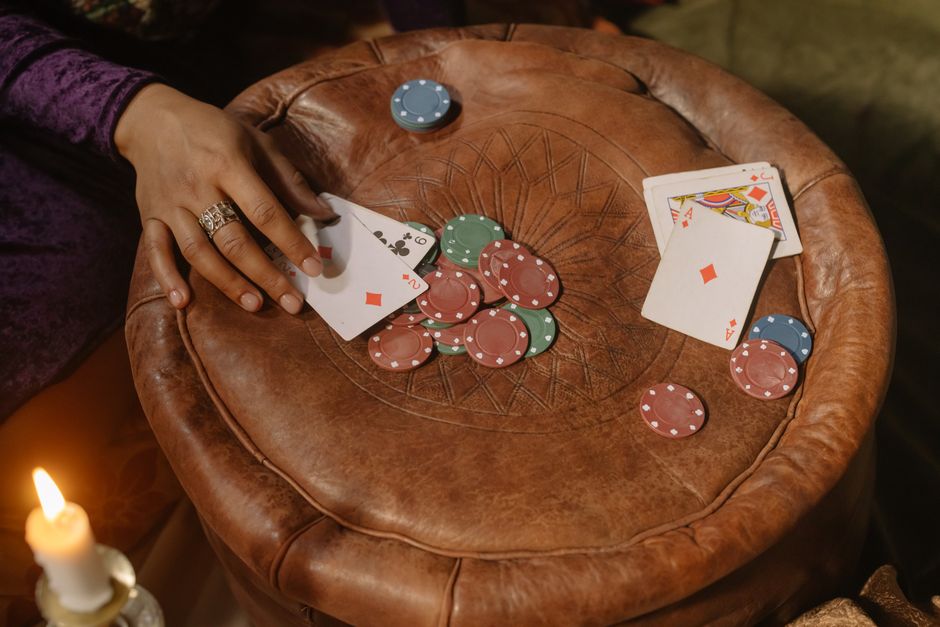
This isn't just a slot concept. In poker, cash games are low volatility — your edge compounds slowly over thousands of hands. Multi-table tournaments are high volatility; you'll bust out of ten MTTs before a deep run pays for the other nine. If you can't handle the swings, stick to cash games.
In sports betting, accumulator bets are high volatility by design. A five-leg parlay at 25/1 feels thrilling and pays big, but your per-bet expected value is worse than betting those same selections as singles. Same principle, different format: rare big wins funded by frequent small losses.
Before you open a game, spend thirty seconds on the info screen. Every regulated slot lists its RTP, and most modern casinos let you sort by volatility or show a rating bar. Four quick checks change everything:
Variance is not the enemy. It's the flavor of the game. You can't beat the house edge over time — no strategy changes that. But you can absolutely control which flavor you sign up for and how long your money stretches while you play.
Enjoy the ride you chose. If you don't understand the ride, you're just paying for someone else's.
Copyright © 2026 Tawny Orchard. All rights reserved.Tawnyorchard. All Right Reserved.
 Eleanor Hartley

John Doe - 20 November 2026
Tawnyorchard We spend our time finding what works so you don't have to, and sharing exactly what made the difference.
John Doe - 29 july 2018
Tawnyorchard Simple, genuine and looked after with care — the kind of place worth returning to.
John Doe - 29 july 2018
Tawnyorchard Real stories, useful guides and the occasional recommendation, all in one calm corner of the web.
John Doe - 29 july 2018
Tawnyorchard We spend our time finding what works so you don't have to, and sharing exactly what made the difference.