
Building a Wildlife-Friendly Orchard with Native Hedgerows
Sep 21,2018 - Sports
Sep 21,2018 - Sports
Sep 21,2018 - Sports

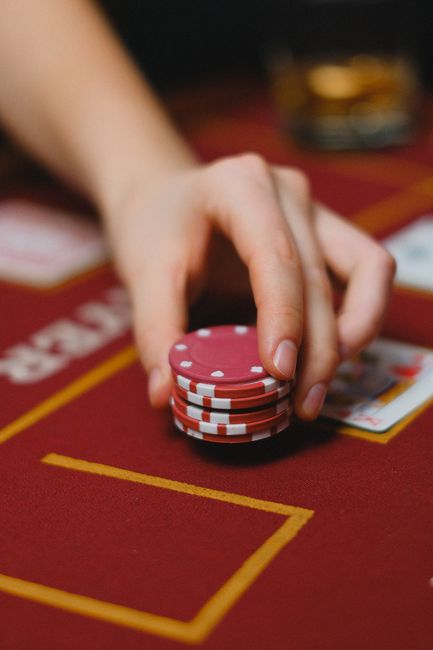
Every gambler has heard the phrase. It's printed on t-shirts, muttered by dealers, and repeated by every casual observer who's never spent four hours grinding a $1/$2 table. "The house always wins." And they're right, in the long run. But here's what that cliché conveniently leaves out: between now and the long run, there's a whole lot of chaos, opportunity, and frankly, bad decision-making to navigate. The distance between the theoretical edge and your actual bankroll is where iGaming gets interesting.
Understanding that gap isn't just for math nerds or professional card counters. It's the difference between being a player who makes informed choices and someone who feeds the machine. Let's break down what's really happening when you spin a slot, sit at a poker table, or place a bet.
When you play an online slot with a 96% RTP (return to player), the house edge is 4%. That means for every $100 wagered, the game is designed to return $96 over an infinite number of spins. But here's the crucial detail: that 4% doesn't evaporate from your bankroll in tidy increments. It manifests as volatility, and volatility is where players either thrive or get crushed.
Consider a high-volatility slot like Money Train 4 or Dead or Alive 2. Their RTP sits around 96.2% and 96.8% respectively, but the variance is brutal. You might spin 300 times without a single bonus round, then hit a 5,000x multiplier that changes your session entirely. Compare that to a low-volatility slot like Starburst, which pays frequently but rarely big. Both have similar RTPs. The experience is completely different.
The takeaway: RTP tells you what happens over millions of spins, not what happens to you in the next hour. Pick your volatility based on your bankroll and temperament, not just the headline percentage.
Here's why poker remains the most intellectually honest game in the iGaming ecosystem: you're not betting against the casino, you're betting against other people. The house takes a rake, sure, but it has no stake in whether you win or lose. That changes everything.
In poker, the "long run" is measured in tens of thousands of hands. A skilled player at a $1/$2 No-Limit Hold'em table might earn 5 big blinds per 100 hands (5bb/100). That's $10 per 100 hands. Sounds modest. But play 1,000 hands a week for a year, and you're looking at a meaningful side income. The catch: variance in poker is ferocious. Losing sessions stretch to 10,000 hands or more, even for winners. Readers looking for specifics may like สล็อต.
What separates profitable poker players from break-even ones usually comes down to three things:
If you're playing online poker in 2024, you're also likely facing solvers and GTO-trained opponents at micro stakes. The games are tougher than they were a decade ago. Adapt or get eaten.
Unlike slots or roulette, sports betting gives you an actual edge if you're willing to do the work. The closing line on a major market — say, an NFL spread or a Champions League match — is remarkably efficient. But inefficient markets exist everywhere if you know where to look.
Sharp bettors focus on a few edges:
One concrete data point: in the 2023 NFL season, the average hold percentage for sportsbooks on player props was almost double that of spreads and totals. That means books are less confident pricing props — and less confidence means more opportunity for informed bettors.
Let's address the elephant in the casino lobby: "I'm due for a win. It hasn't hit in 200 spins." No. You're not due. Modern slots use certified random number generators. Each spin is independent. The machine has no memory of your suffering.
Some players chase losses because they believe variance owes them something. Others move to higher denominations thinking bigger bets will force a payout. Both are mathematically wrong and practically expensive.
What actually matters with slots:
You can have a perfect strategy in poker, sharp reads in sports betting, and slot selection down to a science. If your bankroll management is garbage, you'll go broke. It's that simple.
A practical framework: divide your total gambling budget into session units. If you have $500 for the month and play twice a week, you have roughly $60 per session. At a $1 minimum bet slot, that's 60 spins. At a $1/$2 poker table, that's a 30 big-blind buy-in — playable but not comfortable. At a sportsbook, it's three $20 bets. The numbers force discipline.
The pros don't gamble with money they need. They treat it as an entertainment expense or a business investment with calculated risk. If you're playing with rent money, you've already lost the mental game.
The house edge is real, variance is real, and the long run eventually arrives for everyone. But here's the nuance most people miss: the long run doesn't erase your decisions. It compounds them. A player who understands volatility, manages their bankroll, and picks their spots wisely has a radically different experience from someone who chases losses on a high-volatility slot at 2 AM.
iGaming isn't about beating the house. It's about surviving the variance long enough to enjoy the ride — and maybe, just maybe, catching a wave that goes your way. The house might always win in the end, but you don't have to make it easy for them.
Copyright © 2026 Tawny Orchard. All rights reserved.Tawnyorchard. All Right Reserved.
 Eleanor Hartley

John Doe - 20 November 2026
Tawnyorchard We spend our time finding what works so you don't have to, and sharing exactly what made the difference.
John Doe - 29 july 2018
Tawnyorchard Simple, genuine and looked after with care — the kind of place worth returning to.
John Doe - 29 july 2018
Tawnyorchard Real stories, useful guides and the occasional recommendation, all in one calm corner of the web.
John Doe - 29 july 2018
Tawnyorchard We spend our time finding what works so you don't have to, and sharing exactly what made the difference.